

Titled vs ROP land in Panama, explained for Playa Venao buyers
By Gustavo Szuchman, Papaya Holdings · Published · Last updated
Titled land in Panama is private property registered in your name in the Public Registry (Registro Público), with its own finca number. Right of Possession (ROP, or derechos posesorios) is a recognised right to occupy and use land the State still owns, and it only becomes ownership if the land is later titled through ANATI. For a beach purchase near Playa Venao or Playa Raya, that difference decides what you actually own, what a bank will lend against and how easily you can sell. It also matters that the first 22 metres above the high-tide line can never be privately owned.
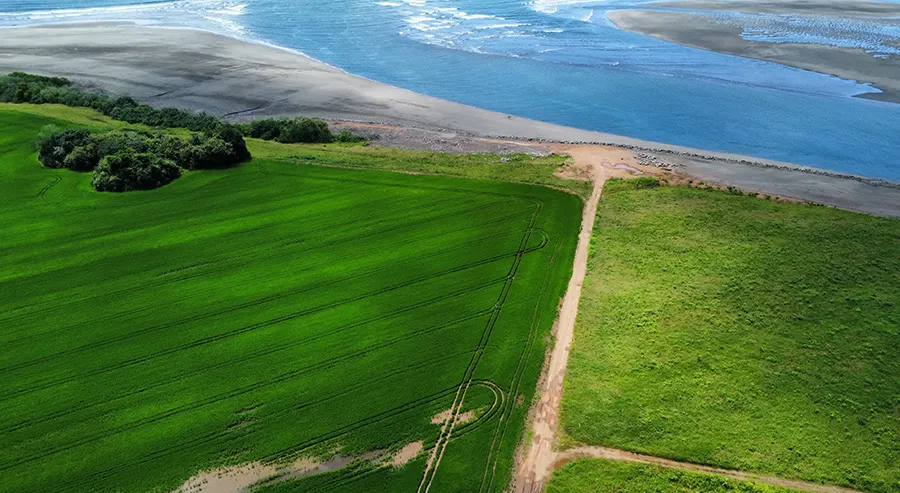
Titled vs ROP at a glance
| Topic | Titled property | Right of Possession (ROP) |
|---|---|---|
| What you own | The land itself, as private property | A right to occupy and use land that still belongs to the State |
| Where it is recorded | Public Registry (Registro Público), under a finca number | Possession paperwork: certifications, sworn statements, receipts, neighbours' statements. No finca until titled. |
| How you check it | Registry search and official certificate: owner, area, mortgages, liens, easements | No single public record. Your lawyer has to rebuild the chain of possession and check for competing claims. |
| Bank financing | Possible, because the land can be mortgaged | Generally not available |
| Selling and inheritance | Straightforward, by public deed registered in the Registry | Harder, since buyers and heirs take on the same uncertainty |
| Path to full ownership | You already have it | A titling application to ANATI, with no guaranteed result or timeline |
| Price | Higher | Usually lower, which reflects the risk |
| Papaya Holdings | Sells titled property only | Does not sell ROP |
What "titled" means
Titled land is registered in the Registro Público de Panamá. Each property has a finca number (also called a folio or registry number). The registry record shows:
- the registered owner (a person or a company);
- the location and area;
- registered mortgages, liens, easements, restrictions and court cases.
You become the owner when the public deed (escritura pública) is signed before a notary and registered in the Public Registry. Until it is registered, you do not legally own the property. Our guide to how to buy property in Panama as a foreigner walks through each step.
Foreigners have the same property rights as Panamanians, with a few exceptions such as land within 10 km of a national border. That exception does not apply on the Azuero coast.
What Right of Possession (ROP) means
A lot of Panama's coastal and rural land was never formally titled. Families have farmed or lived on it for generations, and their right comes from possession: occupying and using the land openly, peacefully and continuously, as if they owned it.
Panama recognises these rights. For coastal zones and islands, Law 80 of 2009 governs how they are recognised and how they can be converted into title. Under that law:
- the possession must be peaceful, uninterrupted and "as owner";
- applicants must generally show more than five years of possession, with evidence such as use of the land, improvements, documents from local authorities and statements from neighbours;
- until the land is titled, possession is governed by the Civil Code. It is a right, not ownership.
Titling used to be handled by the Catastro (cadastre) office of the Ministry of Economy and Finance. Since Law 59 of 2010 it has been handled by ANATI (Autoridad Nacional de Administración de Tierras). In a 2025 interview, ANATI's titling director said that anyone buying a possessory right should first check that the seller really is the holder of that right.
Why ROP is riskier for a foreign buyer:
- You are buying a claim, not land. If titling is refused, delayed or challenged, the claim may be all you ever have.
- Boundaries are often informal, so there is more room for disputes with neighbours.
- Banks generally will not lend against it, and resale buyers will negotiate hard.
- Some land can never be titled, however long anyone has occupied it (see below).
ROP is not illegal, and some ROP land does go on to be titled. But it is a different, riskier product, and it should never be sold or priced as if it were titled.
The coastal rules: 22 metres, 200 metres and public access
This is the part that matters most for beach buyers in Playa Venao and Playa Raya.
- Beaches are public property. Panama's Constitution places beaches (and mangroves) in the public domain.
- The "ribera de playa" cannot be titled. On the Pacific coast, Law 80 of 2009 defines it as the strip running from the high-tide line to 22 metres inland. It is excluded from titling. (On the Caribbean side the strip is 10 metres.)
- The "zona costera" is a wider 200-metre band from the high-tide line. Land in this band can be titled under Law 80's rules, but it is the zone where possession claims, setbacks and environmental rules all apply.
- Public access to the beach must be kept. Law 80 requires land grants to preserve easements that allow the public to reach the beach, and it sets fines for blocking access.
- Mangroves cannot be titled as private property.
In practice, a "beachfront" lot runs to the edge of the 22 m strip, not to the water. You cannot fence the beach or build on it. The State can grant use of public-domain land through ANATI, and some coastal structures need a concession or permit. That is a separate, time-limited right of use, not ownership. If a seller talks about a "concession" on the beach, ask your lawyer exactly what it covers and when it ends.
How to check a property in the Public Registry
- Get the finca number from the seller, the draft contract, a previous deed or the property tax record.
- Search the Registry through the Registro Público's online services (you need to create an account) or have your lawyer do it.
- Compare the record with what you are being sold: owner's name (or company), area, location and boundaries.
- Look for annotations: mortgages, liens, easements, restrictions and pending court cases.
- Order an official Registry certificate for the transaction. Online images are fine for a first look, but they are not legal certificates.
- Cross-check the cadastre (ANATI) survey plan against the Registry area and against what you see on the ground. Coastal lots should show where the high-tide line and the 22 m strip fall.
- Confirm property taxes are paid and that there is legal road access to the lot.
The full list is in our pre-purchase checklist.
What to ask your lawyer
Hire your own Panamanian lawyer: not the seller's, the developer's or the broker's. Ask them:
- Is this land titled, with a finca number, and is the seller the registered owner?
- Are there any mortgages, liens, easements or court cases on the finca?
- Does the registered area and survey plan match the lot I walked, and where exactly is the 22 m ribera de playa?
- Is any part of the lot in mangrove, a protected area or a river or estuary margin?
- Is there registered legal access from a public road?
- If any part is ROP: who holds the right, what evidence supports it, has a titling application been filed with ANATI, and are there competing claims?
- Does any structure rely on a concession or permit, and how long does it last?
- What zoning and building rules apply (height, density, setbacks), and what environmental approvals would a house need?
- Should I hold title personally or through a company, and what are the tax effects?
- Will the deposit go into escrow, and on what conditions is it released?
How this applies near Playa Venao and Playa Raya
- Playa Venao is an established community. Whatever you are offered, a lot in a development or a private sale, check the title in the Public Registry before you commit.
- Playa Raya is at an earlier stage, so check every parcel the same way. Papaya Holdings' Playa Raya lots are titled, and each lot has its own finca number in the Public Registry. Read our Playa Raya guide for the wider picture.
- For any beachfront lot, ask where the high-tide line and the 22 m strip are, and how public beach access is provided.
For more on buying here, see Playa Venao real estate and the buyer's guide. If you have questions about a property, contact us.
Frequently asked questions
What is ROP land in Panama?
Right of Possession (derechos posesorios) is a recognised right to occupy and use land that has not been titled and still belongs to the State. It can sometimes be converted into title through ANATI, but until then it is not ownership.
Is it safe to buy Right of Possession land as a foreigner?
It is legal, but it carries much more risk than titled land: titling can be refused or delayed, boundaries may be unclear, and banks generally will not lend against it. If you consider it, have your own lawyer review the chain of possession and any titling application in detail.
Can you own beachfront property in Panama?
You can own titled land next to the beach. On the Pacific coast, the first 22 metres inland from the high-tide line (the ribera de playa) is public and cannot be titled, and public access to the beach must be kept.
How do I check if a property is titled in Panama?
Get the finca number, search it in the Registro Público (online or through your lawyer), confirm the owner, area and any liens, and order an official Registry certificate before you pay anything beyond an escrowed deposit.
How long does it take to convert ROP to title?
There is no fixed timeline. It depends on the evidence of possession, any objections from neighbours or the State, and ANATI's workload. Some applications are never approved, for example on land within the 22 m beach strip or in mangroves.
Does Papaya Holdings sell ROP land?
No. Every Papaya Holdings project, including Casa Valley, Cove, Vista Verde and the Playa Raya lots, is titled land registered in the Public Registry.
Sources
- Law 80 of 2009 (Ley 80 de 31 de diciembre de 2009), full text: art. 1 (scope, exclusion of riberas de playa), art. 2.3 (ribera de playa: 22 m Pacific, 10 m Atlantic), art. 2.4 (zona costera 200 m), art. 3 (more than 5 years of possession and evidence), art. 4 (Civil Code governs possession until titling), art. 10 (mangroves not titled), art. 12 (public beach-access easements and fines) — panama.justia.com (Gaceta Oficial)
- Law 80 of 2009 on land titling, applied by ANATI (anati.gob.pa; the regulations PDF previously linked here is no longer online)
- Law 59 of 2010 creating ANATI and merging the Dirección General de Catastro and other bodies (FAOLEX / UNEP LEAP summary) — leap.unep.org
- Panamá América, interview with ANATI's national titling director (Feb 2025): Law 80 for coastal land, proof of possession, five years, buyers of possessory rights should verify the seller holds the right — panamaamerica.com.pa
- La Prensa, ANATI on the ribera de playa not being adjudicable under art. 258 of the Constitution — prensa.com
- Gaceta Oficial, ANATI procedure for assigning use and administration of public-domain property — gacetaoficial.gob.pa
- Registro Público de Panamá (official site, online services) — rp.gob.pa
- Casa Solution, how to verify property titles through the online Public Registry: account, finca search, annotations, images vs certificates — casasolution.com
- Mondaq, "A Guide to Real Estate Investment in Panama": titled vs ROP, 22 m / 10 m coastal strip, 10 km border restriction — mondaq.com
Continue reading
- Chapter 1The Playa Venao + Playa Raya Buyer's GuideHow foreigners buy property in Playa Venao and Playa Raya: titled land vs ROP, the steps, taxes and costs, red flags and realistic yields. 2026 edition.
- Chapter 2Turnkey vs Pre-Construction vs Land in Panama: Which Is Right for You?Turnkey home, pre-construction villa or land in Panama? Honest comparison of cost, risk, timeline and which option fits which buyer in Playa Venao.
- Chapter 3The Pre-Purchase Checklist for Playa Venao + Playa Raya Real EstateA 27-point checklist for buying property in Panama: title, location, permits, money and contracts. Work through it before you sign in Playa Venao.
- Chapter 4Panama Pre-Construction Risk: What Buyers Need to Verify Before SigningBuying pre-construction in Panama? The risks that matter, how often projects stall, and a 7-point verification checklist to use before you sign.
- Chapter 5Can Foreigners Own Property in Panama? Rules & Verification StepsHow foreigners can legally own property in Panama: titled land vs Right of Possession, the Public Registry, the buying steps and the mistakes to avoid.
- Chapter 6How to Buy Property in Panama as a Foreigner (2026 Guide)Step-by-step: how a foreigner buys property in Panama in 2026. Reservation, due diligence, promesa de compraventa, deed, costs and timeline.


